Showing posts with label coping with depression. Show all posts

Sunday, 8 May 2016

My day of non-doing

Over a year ago, a friend of a friend recommended a book to me. It's a large book, which I have been dipping in and out of for the past 9 months, called Full Catastrophe Living by Jon Kabat-Zin. In it, the idea of non-doing, which is found in more than one eastern culture, is promoted as a healthy way to prevent stress build up and help us manage the 'full catastrophe' of modern life.

image: http://myunblock.com/
We live extremely busy lives. Everything has to be instant, our brains are always switched on. We're checking emails, waiting for that text from so-and-so to confirm plans for the weekend, wondering what to have for dinner, watching TV, solving problems...It's no wonder more and more of us are finding it hard to switch off.

Depression makes this worse. I spent most of August 2014 trying to work myself into oblivion, because work was the one thing that stopped me thinking. Thinking was destroying me. Every time I had chance to relax, my brain would start telling me, within minutes, that I'm worthless, that no-one liked me and how could they, when I was such a terrible person? I didn't try hard enough, I wasn't kind enough, what's wrong with me? So I worked, and worked to distract myself. And you can guess how healthy that was.

Non-doing


So, finding myself unexpectedly with nothing to do yesterday, I decided to follow some of Prof. Kabat-Zin's advice and consciously do nothing. I don't mean by this that I sat on the sofa watching TV and eating ice cream, nor do I mean I looked at a wall for 6 hours. Rather, I took the time to really pay attention to my body, my thoughts, my actions.

image: http://www.totallypresent.com/
I had a cup of green tea and took the time to taste every mouthful, feel the warmth of the liquid and the tannins, smell the lemon. I paid attention to the feel of the carpet on my feet as I walked about. I meditated, spending time noticing the areas of tension in my muscles and allowing myself to relax. I did a spot of yoga, again focusing on how each stretch and twist felt. And I slept when my brain told me it needed sleep.

What was the point of all this? It slowed my mind down. I am, by nature, an over-thinker with a very active brain. Gently guiding my thoughts into the present moment and curbing the impulse to distract myself was hugely liberating. I did very little all day, and had a really, really, good day. I felt nurtured, restored. I realised how important it is to make that time to switch off from screens and demands and impulses, and just be.

The next challenge is remembering how good it is, and making time for it more often...

Sunday, 24 April 2016

Don't look at me

Today is a 'don't look at me' day. I don't, thankfully, have these too often anymore, but today I am avoiding the gaze of the world as far as possible.

Not so long ago every day was a 'don't look at me' day. It's not uncommon in people with depression. Some have a more extreme version - body dysmorphia - that skews their whole perception of how they look and is an incredibly painful, difficult thing to deal with both for the sufferer and those who love them. Me, I just didn't like what was there.

Not liking yourself or the way you look is tough. Most people experience it to a greater or lesser degree, and I'm not above saying that I think the media and society are accountable at least in part for that. We are told every day, explicitly or implicitly, how we would look, or be, if we were 'real' women or 'real' men. One of my biggest issues with not liking how I looked, however, came from my peers. Because 5'10", size 8 blondes have absolutely no business feeling crappy about themselves, right? Other girls would kill for my physique, my hair, my height. I was even told that by a GP once.

So this is how it would go. I would get up in the morning and try not to look in the bathroom mirror as I undressed to have a shower. I would look at my skinny figure and feel disgusted, because my ribs show when I stretch and there are visible blue veins on the backs of my knees. I'd cry, feeling like a malnourished child. To this day I want to slap anyone who claims that 'real' women have curves.

In order to apply make up, one has to look at one's face. This too I hated, because I have a skin condition called rosacea, which makes my skin dry and red, and has left little scars across my cheeks. (You wouldn't believe how much I've spent on trying to mitigate that). So, diligently covering it all up, I'd repeat 'I hate my face, I hate my face' and wish that just once I could see something other than the cluster of imperfections that looked back at me from the mirror.

And then I'd go to work and pretend that my insecurity about my size, my shape, my face wasn't eating me up. Because I wasn't worthy of that insecurity. How dare I, when other people would kill for this?

My point is, dealing with the issue in the first place is hard enough, but dealing with other people's opinions or judgement around that issue makes it ten times worse. We are not meant to look any other way than we are. Therapy and medication (and a few dates) helped me to finally feel comfortable with the way I look. But attitudes still need to change.

Today is a 'don't look at me' day because I'm tired, and I forgot to take my meds, and I haven't had a haircut for three months, or a colour for six months.

I am not ugly because I have rosacea.

'Real' women do not have curves.

Real women have short hair, or long hair, or something in between. Real women are curvy, or slim, or not quite either, and have big boobs or small ones. Real women have muscles. Oh, a six pack isn't feminine? Tell that to Jess Ennis-Hill.

All women are real women, and we are entitled to our insecurities just as we are entitled to look however we choose to. The same goes for men. Dressing well and not liking football does not make a man any less masculine.

It's time we nurtured a culture of acceptance rather than one of judgement. It may just make us all a little happier.


Drawing: 'Don't Look at Me' by Opfinger on DeviantArt.

Saturday, 5 September 2015

No-one tells you about withdrawal

This post was sent to me by a friend who has been struggling with depression for much longer than me. In it, the experience of SSRI withdrawal is described: this is an exceptionally difficult aspect of the condition to cope with, something that has intense physical and mental side effects that leave you completely exhausted. It's not something that gets talked about a lot unless the user is planning to come off the medication; the GP may mention it when you first get onto the drugs, and then again in the context of coming off, but there's little support in between for the times when you do forget, or are unable to renew the prescription.

I am enormously proud of my friend for having the courage to talk about this, and grateful that I've been given permission to publish it here.

Withdrawal


It's my own fault. Yet my inability to prepare for how I'm feeling right now rears its head every month. I've let myself down and I've let down those I love. 

It should all be so simple. I know the drill. Renew, review, repeat. Yet my closest ally for the last decade too often goes missing at the vital time - and it's all because I neglect to repeat the right part of the process. 

Why do I put myself through days of feeling like I do by being incapable of simply submitting a piece of paper? Perhaps my subconscious wants me to forget. Perhaps it enjoys the company that comes from conversing with myself in public. Perhaps my muscles cry out to involuntarily jerk and twitch just to feel alive. Perhaps those clicking sounds I unwillingly make are humble cries for attention. Perhaps the complete loss of balance, the drowning sensation, and the numbness in my legs are just an assault on the comfort I risk becoming used to. Or perhaps, just perhaps, I need to feel something close to what I'm feeling right now to remember how dark my depression can be, and how I should better appreciate the high points and those around me that do care. 

Regardless of the reason, it's now been five days since my last full dose of Sertraline. These five days - which come at the end of a ten-year relationship - have been tricky to negotiate. I've been in situations that scare me. Situations that, for most people, might seem trivial (being around friends and family, going to work, getting out of bed). Yet, I've managed to get through each moment... just. Yes, it may have been at half speed. And yes, it may not have been much fun for either me or those around me. But get through I have. And I'll continue to get through them, despite what some fleeting thoughts might say. 

I've been promised that tomorrow I will have a full quota of tablets to tide me over. I'll be back in working order - of sorts. A number of doctors have said that I'll have to depend on these little tablets for life. I'm not sure if that's reassuring or not. After all, prolonged exposure to SSRIs alters the brain for good. Going back is not an option. But the way I feel right now, I don't want to go back. I long only for the support that the cocktail of chemicals brings. 

I'll tell myself that next month I'll prepare better. That next month things will be ok. I depend on my tablets to function. I don't necessarily want to, but I do. Maybe that's why I forget. Maybe it's a protest of sorts. Who knows?

Whatever the reason, I feel ashamed to have let myself down again. I rely on the help these pills provide. Does that make me addicted? I'm scared to admit that it does. But I'm also scared that I'll stop. 

Sunday, 30 August 2015

Things I have learned from depression (part II)

A few months back, I wrote down some things I learned from having depression. Having gotten a little further, I think it's time to add to that list.

1. The work never stops. It's so easy to fall back into the mindset that everything is your fault, so it's important to take a moment to put things back into perspective.

The last week I've found myself slipping a little, getting stressed and not being able to catch myself and analyse my responses before I react. I've felt a bit of a mess. Luckily, my therapy has taught me to recognise when to take time out, so today I let myself off the hook: laid in, read, watched TV, let my mind rest. And I woke up after an afternoon nap to the realisation that I'm proud of what I have done this year. Against the odds, I got a new job; I'm still fighting, practising meditation, trying to keep perspective; I stood up for myself; I am standing up for others with mental health problems. I am a depressive and I am not beaten.

2. There is no such thing as normal. Each one of us experiences a different reality, and that reality is our own. Nothing else matters until we have achieved balance within that reality, and can respect that of others.

3. I am not my illness. My illness does not define me. It makes things difficult, it gets me down sometimes, but I am many other things that my illness cannot touch.

4. There are some things that therapy will never solve. And that's OK.

There are certain things that I feel about myself, certain ways I perceive myself that therapy cannot heal. I can't solve the problem, but I can create an experience that contradicts what has gone before.

5. The more I talk about my world, the more the stigma on mental health issues recedes.

Starting a blog was a scary step: there are people that I have never met who have read these words. But my choice to be publicly open about my experience can only help to break the silence around mental health problems. Only true understanding and empathy can ultimately vanquish fear and engender acceptance.


Tuesday, 23 June 2015

The little white pill on the counter top

There is a small white pill on the kitchen counter. So far I have managed to cut it in half, and I am looking at the two pieces. Two tiny 25 milligram pieces of SSRI. Taking it should be easy; it is going to help me get better.

We are, after all, a generation of self-medicators. We pop painkillers, contraceptives, allergy tablets as casually as we have a conversation. When we get sick, we Google our symptoms and can prescribe ourselves something before we've even seen the GP. Easy.

I cannot take this tablet. I'm so scared. As I stand staring at it, my head floods with everything that swallowing this tablet means, and could mean. It means I really am ill; it means a long uphill climb just to become normal; it means that I am about to become dependent on a drug. What if I can't come off it? What if, after 6 months, 50mg isn't enough? What if it doesn't work? What if I get awful side effects?

If there is one night I need someone to hold my hand, it's tonight. There is no-one. I sink to the kitchen floor and cry.

Half an hour later and I get to my feet, pick up the tablet. I think of my friend Jen. I think of what she would say. She'd tell me I'm brave, so that is what I tell myself, slightly shaky, tablet in palm. You are so brave, you are so brave, you are so brave... Seven times I repeat this before I can tip the tablet into my mouth and chase it with water. It's done. I collapse on the couch and begin crying all over again.

***

It is almost ten months later, and it turns out taking that first pill was a good idea after all. SSRIs don't work for everyone - they're not even necessarily recommended by GPs - but they gave me the stability to make that uphill climb and to get my head around a healthier way of looking at things.

Last week I began to come off my meds. It's a long process - I basically have to trick my body into not noticing I'm withdrawing so that I can minimise the symptoms - but I can live with that. I'm coming off the meds. It's another of my little victories.


Sunday, 3 May 2015

Saying goodbye and the end of my totally emo existential crisis

This week has been big. Huge, in fact.

This week, I decided to stop having therapy. I didn't know until the day of my last session that I was ready to stop - it was one of those light bulb moments when suddenly you just know. I was driving away from an occupational health assessment, which I had found slightly insulting for reasons I won't bore you with, and it occurred to me that I was utterly sick of talking about my mental health.

During a friend's wedding last month I realised that I have accepted the fact that depression is a part of who I am. It's unlikely to go away, but it's manageable, and what's more, I no longer care about being judged. Because ultimately if someone thinks less of me because of my condition, it's symptomatic of their lack of education and understanding around mental health. It's their problem. In some ways my light bulb moment was the next logical step, but I wasn't expecting it to happen so soon.

muppet.wikia.com
Sat in my session that evening I felt like there was nothing left to say. Nothing to confess to, or to get off my chest. And so my therapist and I agreed it was time for us to part.

It's an odd feeling, saying goodbye to somebody who has basically steered you through the worst time in your life. She knows everything - everything - about me, yet I know nothing about her. I have been weak, vulnerable, ashamed, confused, hopeful and everything in between during our sessions, and together we have unpicked the tangle of thoughts, emotions and experiences that brought me to her in the first place. Saying goodbye was sad and joyful and melancholy and exciting all at once.

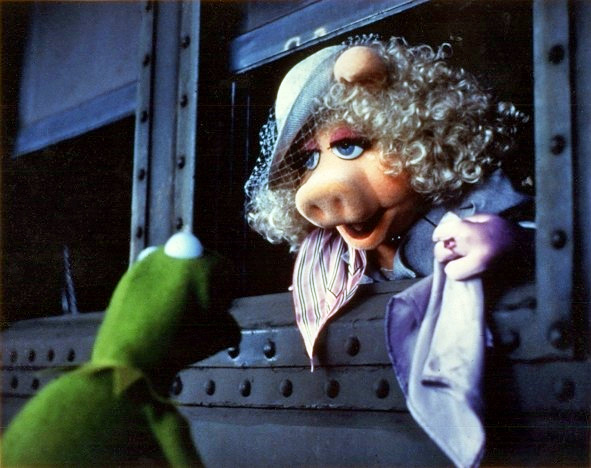
In case you're wondering, the part of me is being played by Miss Piggy in the above photo.

On, like, totally finding myself yeah?


www.superfunnyimages.com
It is a cliche, but for some of us there comes a point where we need to reassess who we are, because we need to challenge ourselves, or get a new perspective, or because the person we were just isn't working out for us anymore. There's this idea that to do so, it's necessary to spend a month in silence on an uninhabited island or spiritually connect with a Balinese wise man or something.


I am proof that this is a fallacy. I did not have to spend time in an ashram in India in order to find myself. I did not do it by seeking out a Tibetan fortune teller or a Kalahari shaman. I realised that I could be the person I want to be on a gently sagging sofa in a small room at the local community support centre. I did it by laying myself bare to a complete stranger and allowing her to help me sort through the broken pieces, remove the sharp bits and build something stronger from what was left.

The point, despite what gap year students might have you believe, is that accessing your inner strength and becoming someone you can accept and like is not about helping Cambodian orphans or taking some dubious substance and talking to God. It's about making sense of your past so that ultimately you can leave it behind and step confidently into your present.

And on a lighter note...


I have officially smashed my £1,000 target for the trek, and I still have 4 months to go!!!


sbr.ocsb.ca

Thursday, 23 April 2015

The Little Book of Little Victories, and how I learned to do confrontation

Well hello there! It's been a while. Fundraising is currently taking a small hiatus while I figure out when to do my next event. In the meantime, life has delivered a good deal of excitement to my door.


The Little Book of Little Victories


When I first started my medication I decided to keep a 'victory' diary, which I affectionately call the Little Book of Little Victories, and still add entries to every so often. Depression, as I have explained, makes everything harder, from cooking dinner to socialising. So in order to get through, it helps to focus on the small things that have a positive impact; those things that mean, if only for a few moments, that you've beaten it.

In the beginning, the victories were simply things like, "Cleaned the kitchen and tidied my bedroom" and "Haven't cried today." Underneath these, I wrote how those actions make me feel. In mid September I recorded the first time that I had felt normal (for a given value of normal) in months. As the weeks and months have progressed, my little victories are growing, and recently I have been able to add two very significant ones to the list.

Last month I somehow managed to negotiate my way through a hefty interview process and find myself with a new job. Although my stress levels sky rocketed during this time, and I shed more than a few tears, I'm feeling pretty proud of myself for making such a step in such a short time. Once again I have to attribute some of this to the support of family and colleagues, but the fact that it's something I could never have done six months ago makes it all the more rewarding.

I've now been in my new role for almost a month, and have coped with the transition better than I imagined. For the record, I had imagined more than one meltdown by now. There have been none.

How I learned to do confrontation


I write this with some hesitancy, because I don't wish to claim that I have, by any means, nailed this particular issue of mine, but today, I had a conversation that required me to be somewhat confrontational, and I managed it without panicking, getting flustered, or feeling guilty.

Allow me to offer some background. Put simply, I hate confrontation of any kind. Historically I have found it sort of embarrassing and experienced feelings of guilt soon after expressing any sort of displeasure. At anything. I have talked, at some length, with my therapist about this, and when I happened to mention again that I don't like confrontation the other week in my session, she replied with a sly grin, "Don't you?!". You know you're getting better when your therapist starts getting sarky.

So the most recent victory for me was having that conversation, where I articulated my frustrations clearly, assertively and without embarrassment, and instead of feeling bad (which my brain tried a couple of times to make me do, resulting in an internal Smeagol/Gollum type scenario in which Smeagol ultimately won, getting Gollum to eff off) - I actually felt pretty good. Not, I'd like to point out, because I'm a heinous bitch who enjoys having a go, but because I had the courage to stand up and fight my corner. And that is a pretty big little victory.

Pics courtesy of http://imgarcade.com/ and http://www.quickmeme.com/